
1.Ask Sque Conversation Memory
Ask Sque remembers your conversation history. This allows you to refine answers, ask follow-ups, and build on previous responses without repeating context.
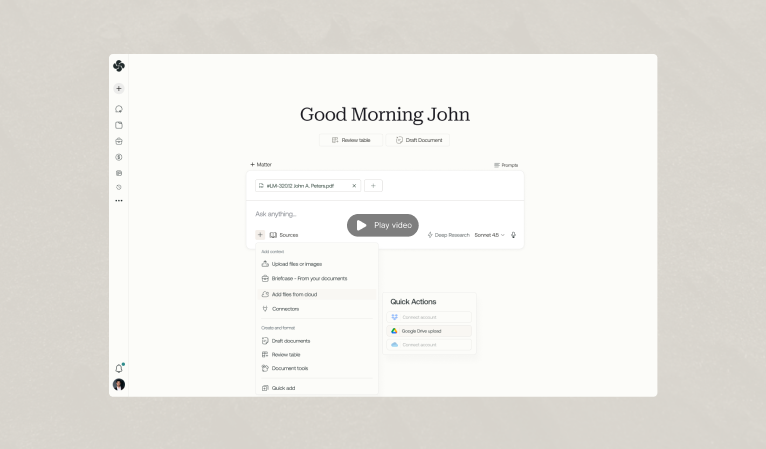
2.How Conversation Memory Works
Within a single conversation:
- Ask Sque remembers all previous questions and answers
- You can reference earlier points without restating them
- Follow-up questions can assume Ask Sque knows the context
- Uploaded documents remain available throughout the conversation
3.Effective Follow-Up Questioning
Building on Previous Answers
Example conversation:
- You: "What is the standard for establishing personal jurisdiction in federal court?"
- Ask Sque: [explains due process standard and minimum contacts test]
- You: "How does that apply to online commerce?"
- Ask Sque: [answers without needing you to restate the context]
- You: "What about service of process?"
- Ask Sque: [continues building on earlier conversation]
Refining Answers
You can ask Ask Sque to improve or change its answers:
- "Make that more concise"
- "Explain the holding more clearly"
- "Provide more aggressive language"
- "Include case citations"
- "That explanation was too technical—simplify it"
Clarifying Misunderstandings
If Ask Sque misunderstands:
- Correct the misunderstanding: "Actually, the case involves X, not Y"
- Ask Sque updates its understanding
- Ask the question again with the corrected context
Deep Dives with Multiple Follow-Ups
Example: Researching a complex legal issue
- Initial question: "What is software patent eligibility under Section 101?"
- Follow-up 1: "How did the Alice decision change this?"
- Follow-up 2: "What's the impact on business method patents?"
- Follow-up 3: "Has there been any shift since Alice?"
- Follow-up 4: "Apply this to our situation where we're patenting AI-powered contract analysis"
4.Conversation Patterns
Broad to Narrow
- Start broad question: "What is due process in employment law?"
- Narrow with follow-ups: "How does that apply to wrongful termination?"
- Get specific: "In our termination case, does this apply?"
Learning and Application
- Learn the law: "Explain patent infringement damages"
- Apply it: "How are reasonable royalty damages calculated?"
- Adapt to case: "In our case with these specific facts, what damages theory works best?"
Drafting and Refinement
- Start with draft: "Draft a motion to dismiss"
- Get feedback: "Strengthen the arguments on the pleading standard"
- Refine style: "Make it more conversational, less formal"
- Polish: "Fix the grammar and clean up the citations"
5.Conversation Limits
Important to know about conversation boundaries:
Conversation Length
Very long conversations may become unwieldy. If your conversation gets very long (50+ exchanges), Ask Sque's context window may start to degrade. Consider starting a new conversation for a new topic.
New Conversations Start Fresh
When you start a new conversation, Ask Sque doesn't remember previous conversations. If you need to reference prior work:
- Copy and paste relevant prior responses
- Re-upload documents from prior conversations
- Restate key context
Document References
Documents uploaded in a conversation are available throughout that conversation. Once you start a new conversation, you'll need to re-upload them.
6.Best Practices for Conversations
- Use follow-ups to build on information rather than starting over
- Clarify if Ask Sque misunderstands something
- Ask for refinements rather than accepting initial responses as final
- Upload documents once and reference them throughout the conversation
- Start a new conversation when switching to a completely different topic
- Review the conversation history to see what you've already asked
7.Example: Multi-Query Research Session
- You: "I need to understand non-compete enforceability in California for a client matter. Summarize the current law."
- Ask Sque: [explains California non-compete law, key cases, and enforceability factors]
- You: "Our client has a two-year non-compete. Can that be enforced?"
- Ask Sque: [explains that two years is likely unreasonable under California law]
- You: "What if the non-compete is limited to a specific geographic area—is that better?"
- Ask Sque: [explains that geographic limitations help but courts still focus on reasonableness as to time]
- You: "Can we negotiate with the employee to reduce it to six months?"
- Ask Sque: [discusses reasonableness of six-month restrictions and likelihood of enforceability]
- You: "Draft a revised non-compete with those modifications."
- Ask Sque: [drafts revised six-month non-compete]
- You: "Make it stronger—add provisions about customer lists and trade secrets."
- Ask Sque: [revises to include those provisions]
Throughout this conversation, Ask Sque understood the context and built on earlier responses without requiring repetition.
Frequently asked questions
Yes. You can update your personal preferences at any time from your profile settings, including notifications, display options, and workspace defaults. Changes apply to your account immediately unless noted otherwise.
Your preferences can affect tone, formatting, and how responses are presented, but they do not change the underlying legal definitions or matter-specific context Sque uses when analyzing your documents and queries.